
When has an archaeological object been “found”? At first glance, it seems an oddly technical question with an obvious answer.
But in Preece – Taonga Tūturu found at Rēkohu/Wharekauri, the Māori Land Court’s answer has potentially significant consequences for the protection of taonga tūturu.
The Court held that a large ocean going waka buried in coastal dunes on Rēkohu/Wharekauri had been “found” for the purposes of the Protected Objects Act 1975, including parts known from archaeological evidence to remain buried and unexcavated.
The significance extends beyond this waka. The decision indicates that the Crown’s responsibilities can extend to parts of an identified taonga tūturu known to remain in situ, even though they have never been physically exposed or recovered.
The discovery
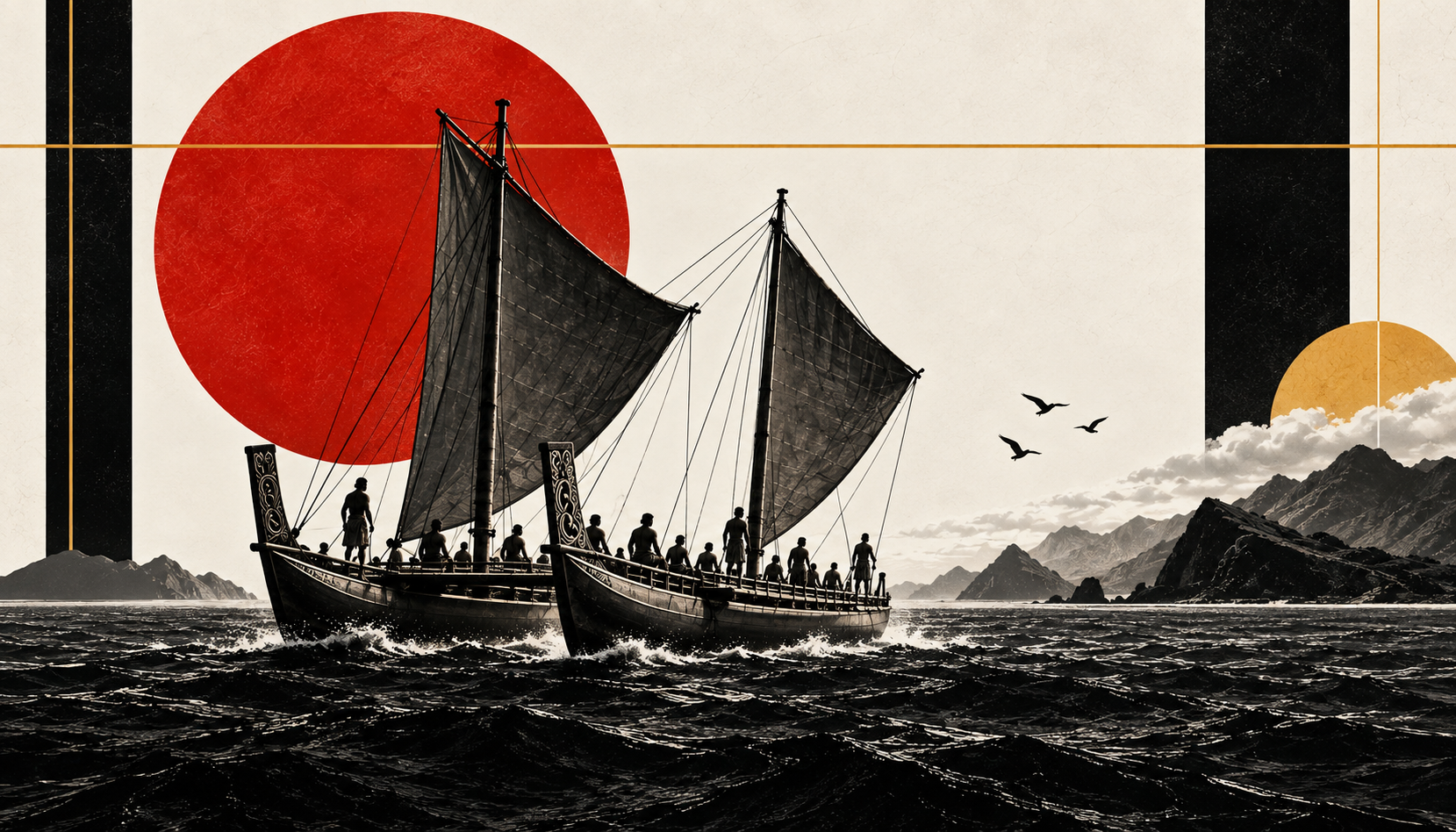
In August 2024, Vince and Nikau Dix discovered finely carved wooden remains in sand dunes adjacent to Wharekauri Station on the northern coast of Rēkohu. Archaeological investigation established that the remains were part of a large voyaging waka, probably wrecked at the site between approximately 1440 and 1470.
The recovered material indicated that the vessel was a waka tuitui, a planked waka stitched together using a construction method dating from a period before substantial cultural separation across the Pacific. Timber and obsidian sourced from mainland Aotearoa indicated that the waka had been constructed or repaired there before its final voyage.
The Chief Archaeologist, Dr Justin Maxwell, regarded the site as one of the most important archaeological sites encountered in New Zealand and the wider Pacific. A limited rescue excavation in January and February 2025 recovered more than 750 pieces, which were placed in conservation storage at Wharekauri Station.
Dr Maxwell estimated that as little as 10 per cent of the waka might have been recovered. Dense concentrations of components continued into the unexcavated dune walls and there was no practical way to determine the full extent of the remains without opening a substantially larger area.
The site was also vulnerable to coastal erosion, storm surges and water flowing through a nearby creek. Dr Maxwell warned that a major storm could result in the loss of waka components and an irreplaceable part of the cultural history of Rēkohu and Aotearoa.
The ownership application and the preliminary issue
The trustees of the Hokotehi Moriori Trust and the Moriori Imi Settlement Trust applied on behalf of Imi Moriori for orders that the waka was a taonga tūturu, that it had been made by and brought to the site by Moriori or their karāpuna, and that its actual and traditional ownership was vested in the applicants as representatives of Moriori.
The ownership question was not decided in this judgment. Instead, the Court first considered whether the parts of the waka still buried in the dunes had been “found” under the Act.
That mattered because section 11(4)(a) requires the Chief Executive, after notification of a find, to take whatever action the Chief Executive considers appropriate for the taonga tūturu’s examination, care, recording and custody. The Crown maintained that this responsibility extended only to parts that had actually been uncovered or otherwise identified with certainty.
The competing interpretations
Moriori, Ngāti Mutunga o Wharekauri and the Dix whānau argued that the find was the waka itself, rather than merely the individual pieces recovered from it.
They argued that once enough had been discovered to establish the identity and nature of the larger object, the find was not limited to the particular components already removed from the ground. “Found” was defined by reference to something being “discovered or obtained”, and discovery could include acquiring knowledge of something’s existence without physically possessing it.
The Crown argued that “found” required the actual discovery of a specific object whose existence and identity were known with sufficient certainty. It was not enough that experts predicted or inferred that further material was likely to exist beneath the dunes.
The Crown also argued that section 11 was the gateway to a statutory regime under which taonga tūturu became prima facie Crown property, so the threshold needed to be clear and workable.
The waka was the object that had been found
Judge Doogan accepted that “found” required the actual discovery of an identifiable object. He did not, however, accept that the buried remains were merely predicted or hypothetical.
The object was the waka itself. What had been discovered was not simply a collection of unrelated timbers, but the remains of a large and identifiable ocean going vessel. Where an object had been broken into pieces, the scope of the find was a question of fact and degree.
Enough components had been exposed and recovered to establish the identity of the object. It was also known, rather than merely suspected, that a substantial part of the same object remained within the dunes. That was supported by the configuration of the exposed timbers, components extending into the dune, the archaeological investigation and Dr Maxwell’s expert assessment of the likely area containing the remainder.
Some components had been “obtained” through recovery. The remainder had been “discovered” because their existence had become known with sufficient certainty. The case therefore went beyond speculation that further taonga might exist somewhere within an archaeological site.
The protective purpose of the Act
The Court also considered the wider protective purpose of the Act.
Judge Doogan rejected the Crown’s characterisation of the Act as principally concerned with preventing export, sale and souveniring. The 2006 amendments enabled New Zealand’s participation in international conventions concerned with the protection of cultural heritage, including preservation of cultural property in situ.
The wording of section 11(4) was also important. The earlier Antiquities Act 1975 referred to examination, recording and custody. The Protected Objects Act added an express obligation to provide for the taonga’s “care”. Judge Doogan considered that this demonstrated an enlarged responsibility resting on the Chief Executive.
The responsibility was therefore not confined to components already removed from the site. It required consideration of what was appropriate for the examination, care, recording and custody of the entire find.
Ownership was not a precondition to protection
The Court rejected the proposition that ownership needed to be determined before decisions could be made about the buried waka.
The statutory responsibility arose upon notification of the find. An ownership application did not displace or suspend the Chief Executive’s obligations.
Judge Doogan accepted that the Chief Executive retained a broad discretion as to what action was appropriate. The judgment did not require a full excavation. It did, however, establish that the discretion had to be exercised in relation to the entire waka, including the components remaining at the site.
The Court directed the Crown to state what action the Chief Executive considered appropriate for the examination, care, recording and custody of the buried remains, and to provide the anticipated timeframes.
The result is important beyond the particular waka. Physical recovery is not necessarily required before taonga tūturu have been “found”. Where part of an identifiable object has been discovered and there is sufficient evidence that more of that same object remains buried, the Crown’s responsibilities under section 11(4) may extend to those unexcavated remains.
How far that principle extends will depend on the evidence. The Court was clear that suspicion that further taonga might be present is not enough. Nor does the decision require the Crown to excavate every such find. The Chief Executive retains a broad discretion as to what action is appropriate. What the Crown cannot do is treat known, unexcavated parts of the find as falling outside its statutory responsibilities altogether.
As this case demonstrates, cultural heritage matters can involve complex questions of ownership, protection, export and regulatory responsibility. For advice on how the law applies, contact GCA Lawyers.
The information on this website is general in nature and may not be up to date. It is not intended as legal advice for any specific situation or person and should not be relied on for that purpose. You should always seek up to date legal advice for your specific situation.
Contact us to find out more.
Leave a Reply