
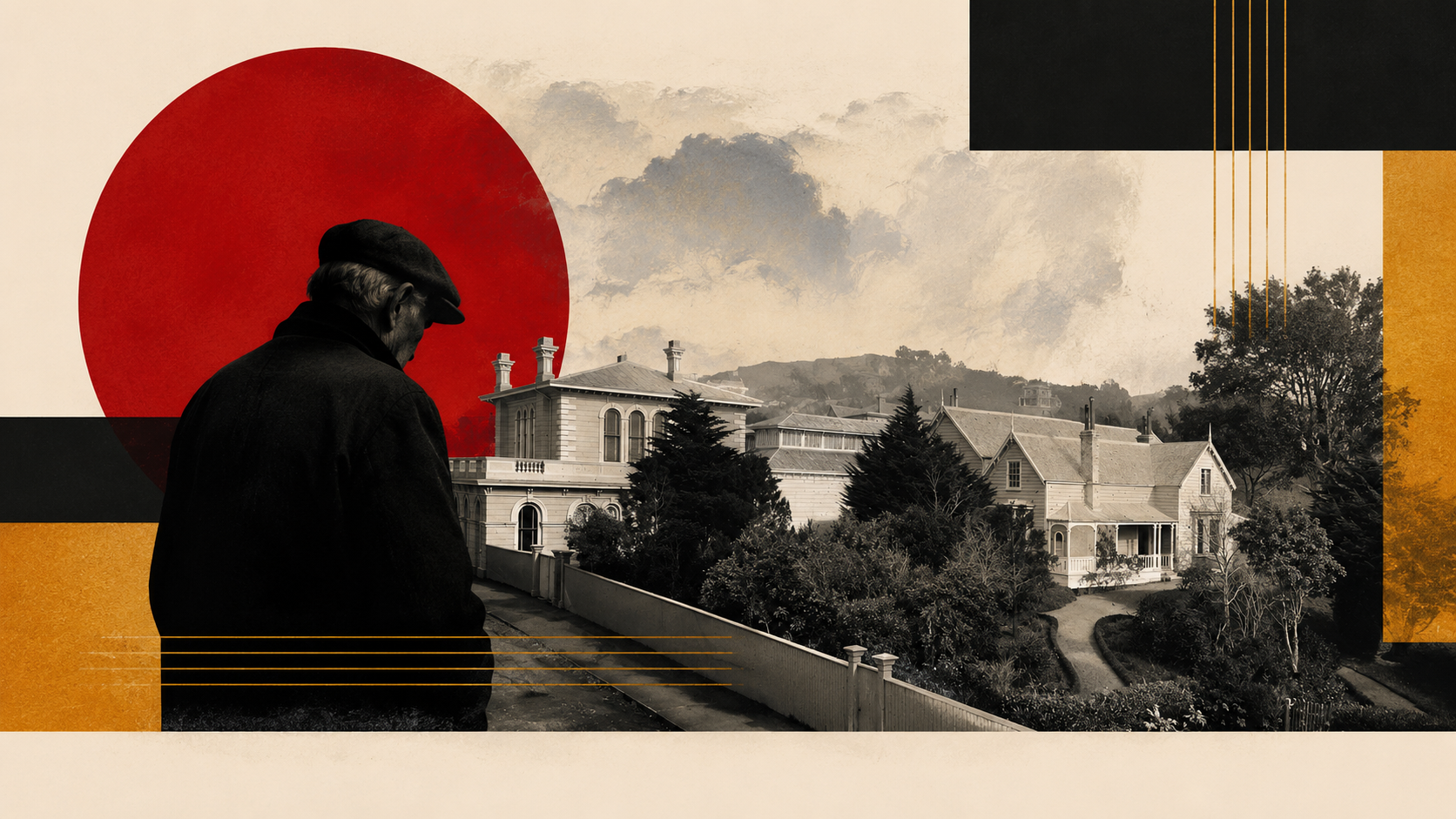
On 3 March 1866, the Supreme Court at Wellington dealt with a small, strange, and very early piece of New Zealand cultural heritage crime: R v James Young. Young pleaded guilty to burglary and housebreaking after property stolen from the Colonial Museum at Thorndon was recovered from behind the walls of an empty house.
The stolen haul was wonderfully odd: a gold ring said to have once held a lock of Napoleon’s hair; chronometers; binoculars; European, Chinese and Roman jewellery; various medals; foreign and ancient Persian coins; pounamu; precious stones; a hei tiki, various adzes and a mere; watches; a magnifying glass; sharks teeth; and even a needle made from human bone. The theft was serious enough for police to print a surviving £100 reward poster, now held by the Alexander Turnbull Library.

The case may be New Zealand’s earliest recorded court decision involving cultural heritage or art theft. And, while it was not framed that way in 1866 (Young was prosecuted as a burglar) that the target was a public museum, the objects included taonga and historical curiosities, clearly contributed to an official response that treated the missing collection as a matter of public importance.
The breakthrough came from prison. According to the Evening Post report of 3 March 1866, Young, already awaiting trial, confided enough to a fellow prisoner, Private James Clavin of the 14th Regiment of Foot, for Clavin to alert a turnkey named Johnson. Clavin led Johnson to an unoccupied house, where, after sounding the walls, they found the “swag” hidden behind the lining.
A fuller report, reprinted in the Lyttelton Times, gives the scene almost cinematically. The house contained little but a candle in a bottle and a box of matches. Then, one by one, the stolen articles came out: two chronometers, precious stones, foreign coins, a large Indian brooch, a mere, three watches, a Legion of Honour cross, a Roman ruby brooch, two binoculars, silks and shawls, and the Napoleon ring, though the hair had been removed.
Other stolen goods appeared too: silver candlesticks from the Roman Catholic chapel, a priest’s coat and hat, a decanter thought to have come from the Royal Tiger Hotel, two centre bits, and a bundle of skeleton keys. This was not a romantic art robbery. It was a busy burglar’s inventory.
In court, Young asked to change his plea to guilty. He was unrepresented. The Wellington Independent’s Supreme Court report records his short plea for mercy: he knew he had been “very wicked”. A witness, Mr Read, said Young had admitted there was no point denying things once the goods were found. Young claimed he had been made “a dupe by others”, but the judge was plainly unimpressed.
Johnston J sentenced him to ten years’ penal servitude for the first offence and four years for the second, fourteen years in all. The judge added that he hoped the police would discover Young’s associates, “both in and out of the Colony.”
The reward then became its own public drama. A Mr Kells, whose information had led to Mr Young’s arrest in another matter, claimed some credit because he had helped put police on Young’s trail. But the Wellington Independent of 8 March argued that Clavin deserved the real credit. Clavin could have waited until his sentence ended and then claimed the reward as a free man. Instead, he gave the information while still in custody.
By late March, the story had travelled. The Nelson Examiner reported that Clavin had been released from prison and given a free pardon, while urging that he deserved more than liberty a few days early.
Seen today, R v James Young is more than a quirky colonial burglary. It is a reminder that museums were vulnerable from the beginning, that cultural objects were already being gathered into public institutions, and that their theft could stir police, press, courts, and public reward machinery into action. Before “art crime” was a category, Young’s raid on the Colonial Museum had all the elements: a public collection, portable treasures, a sensational inventory, an informant, a hidden cache, and a courtroom reckoning.
Leave a Reply