
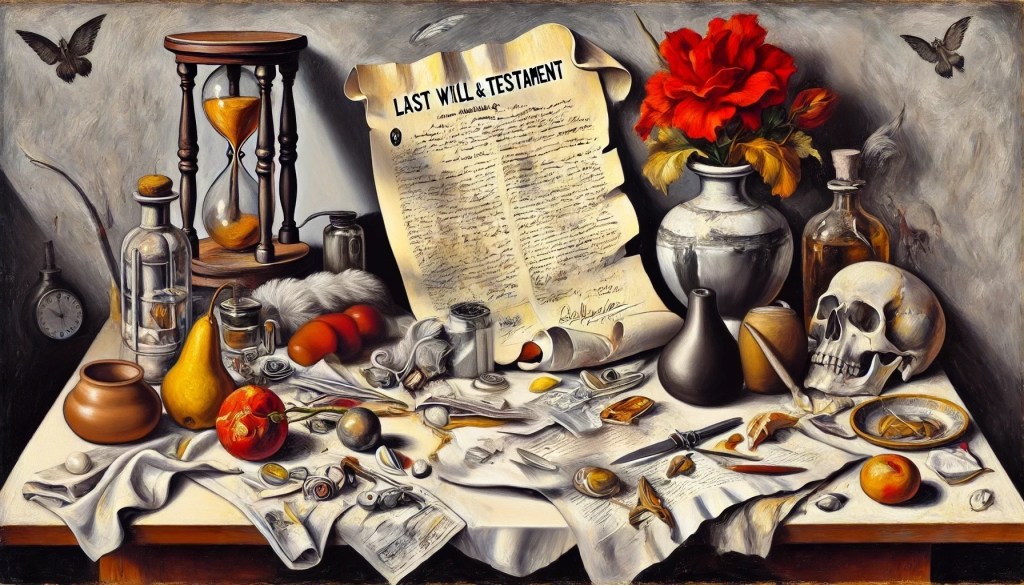
An artist’s resale right under New Zealand’s Resale Rights for Visual Artists Act is a form of personal property. It is inalienable during the artist’s lifetime, meaning it cannot be waived, assigned (eg sold, given, or otherwise transferred to someone else) or charged (used to secure a debt) while the artist is still alive. However, upon an artist’s death, the resale right is able to be transferred to the artist’s “successor”, and lasts for a period of 50 years after the death of the last surviving artist involved in the creation of any particular artwork.
This is a fascinating part of the Act, which creates a lot of very interesting issues, opportunities and (possibly) problems for artists and their estates, as well as potential commercial opportunities for those who might be interested.
This article explains how the Act provides for this, and what artists should consider in their testamentary planning as a result.
Successors
An artist’s successor is the person or persons who inherit the resale rights under the will or on the intestacy of the artist, or to whom that right is later transferred.
A full explanation of wills, intestacy and estates is beyond the scope of this article. A number of tricky issues can arise when planning your estate, and deciding what is best for you can go well beyond the scope of resale rights. You should therefore consider taking legal advice about how these issues might apply to you.
But, in so far as an artist’s resale rights are concerned, very broadly, an artist can decide who their successor(s) under the Act will be by way of a will if the artist is over 18 and of “sound mind” (someone under the age of 18 can also make wills in certain specified circumstances). If an artist has not made a will, then their successors will be determined by law, in which case who becomes their successors will depend on their circumstances. This may (or may not) necessarily be who the artist would want to inherit their resale rights or to manage their artistic legacy generally.
As such, careful thought should be given to who the artist wants to inherit these rights during the artist’s lifetime, while they remain in good health and are able to make a will.
Who can (or should) be appointed as a successor?
An important point to consider when deciding who an artist should appoint as a successor under the Act is that in order to be eligible to exercise the resale right the successor must meet certain criteria at the time a qualifying sale occurs. These criteria mirror those for the artist during their lifetime, and include either being a New Zealand citizen; being domiciled or resident in New Zealand; or being a citizen or resident of a reciprocating country. There could therefore be little point in leaving the rights to someone unlikely to meet these criteria, although as we shall see, the rights can be sold or transferred by the successor, and they may be able to recoup some value that way if nothing else.
What can a successor be left?
The Act does not have a clear statement of the way resale rights might be divided between the artist’s heirs. Some interpretation is therefore required.
What is apparent is that the Act allows an artist to leave their resale right or rights to more than one person, with each successor holding the share of the rights that they inherit or is transferred to them. It is implicit in this that these shares do not necessarily have to be equal shares (although they could be), indicating that an artist may be able to divide the rights as they please to some extent (for instance they might be split the rights between two successors in such a way that one person holds one third of the rights and another two thirds).
But it is unclear exactly how far the artist’s discretion to determine the nature of the share left to any particular successor goes. The wording of the relevant section talks about both the holder of resale “rights” in the plural and the “right” singular. The use of the plural possibly implies that the Act intends the artist to pass their resale rights to their successor(s) collectively, so that they share proportionally in the royalties that arise on the sale of any of the artist’s qualifying artwork. If correct, this might limit the testamentary freedom of the artist by preventing them from leaving the resale rights with respect to a particular artwork to one person, while leaving the rights in another to someone else etc. However, with the section also using “resale right” in the singular in places, it is also possible that it was intended that rights on an artwork by artwork basis might be able to be passed on. Unfortunately, exactly what was meant here is not clear, and it may be that this could lead to issues that may have to be resolved by the courts at some future date, unless the Act is amended to clarify matters.
Corporates to the rescue?
It may be possible to address some of the issues noted above by leaving your rights to a corporate entity rather than a natural person. The Act contemplates a corporate successor, stating that a successor may also be eligible to exercise a resale right if it is incorporated, registered, or carrying on business in New Zealand or a reciprocating country.
This could be used to address a number of possible testamentary problems. For example, it might allow an artist to leave their resale rights to a trust or company based in New Zealand, but owned or otherwise controlled by a natural person who may not meet the eligibility criteria.
Further, trust documents such as the trust deed or memorandum of wishes; or company documents such as its constitution or shareholders agreements, could allow for greater nuance (or at least greater certainty) in how the resale rights might be divided between multiple shareholders or beneficiaries than is explicitly provided for under the Act. This could also provide a degree of control over how resale rights might pass after the artist’s death, as it may be possible to structure such entities in a way to limit when rights or how can be transferred by the successor, or at least make this more difficult (a topic we come to below), which could be handy in some situations.
Leaving rights to corporate entities may also be useful for artists in other ways. For instance, rather than having the benefit of any royalties passing to particular individuals, leaving these to a corporate entity might be suitable should an artist wish their resale rights to serve a charitable purpose after their death, or if they would like to establish an organisation tasked with managing their artistic legacy.
It is however important to note that some tricky (and potentially disproportionately expensive) tax, compliance and structuring issues can arise with corporate entities, and it is essential to seek advice about what is suitable in each individual case.
How does the resale right change after the artist’s death?
While successors have the same right to claim a royalty after the artist’s death (and must meet the same eligibility criteria) as the artist did, there are some important changes to the way the right works after the artist dies.
Duration
The first change is that the death of the artist potentially starts a clock running on the duration of the right. This is because the Act provides that the right has a duration of 50 years after the end of the calendar year in which the artist dies. This is qualified in the case where an artwork has been created jointly by two or more artists, in which case the 50 year period only starts to run after the end of the calendar year in which the last of those artists dies.
Reselling the resale right and other transfers
The other big difference is that while the artist is not allowed to waive, assign or charge their resale rights during their lifetime, after they die their successor is permitted to transfer the resale right as personal property by way of assignment, testamentary disposition or otherwise by operation of law.
Obviously this lets the successor leave the right in their own will to their next of kin, allowing the right to be passed on within a family for instance.
But there is no restriction in the Act as to who the rights may be transferred to (although again, if use is to be made of the right the person to whom the rights are transferred must meet the eligibility criteria), or when the transfer can happen. As such it seems entirely possible for the successor to transfer the right to someone with no lifetime connection to the artist. Nor does there appear to be any problem with the rights being assigned for consideration (eg payment) of some kind.
A lot of interesting issues arise as a result of this.
First, it seems that the rights might be sold by an artist’s successor. This is something an artist may wish to consider, as while they may be entirely comfortable with this (after all, the sale of the right might provide welcome financial support to their successor), they may prefer that the right be retained by family or a particular person or entity (which may be a reason to consider a corporate successor, or to seek to impose some other restraints on how the right might be used (for instance, conditions imposed on this via the artist’s will), as discussed above)).
This also raises the possibility of a market for such rights arising. For example, there may be a business opportunity in such rights being brought up by a person or organisation in order to obtain any future resale royalties in respect of the artworks concerned. There may also be opportunities for speculators, with the underlying rights being traded; or perhaps even securitised. Interesting valuation issues may well arise as a result.
Second, as personal property, it seems that the rights will be able to be transferred away from the successor involuntarily in some situations, such as by way of insolvency processes for example. If an artist is concerned about such things they may therefore wish to take the financial stability of any possible successor into account when deciding who to appoint and/or how to structure this.
Again, as with the issues noted above about the ambiguity in the Act when it comes to how resale rights might be left to the artist’s successors (and the extent and manner in which the rights might be divided), it is unclear the extent that resale rights can be divided on transfer by the successors. Eg, can a successor transfer a fraction of the bundle of rights as a whole to a third person? Can they transfer the rights with respect to a particular work (or a particular sale of a particular work), while retaining the rights in other works? Can they go as far as to transfer a fraction of the rights with respect to a particular work? The Act does not address this.
What about artists who died before the Act comes into effect?
Finally, although the Act takes effect on 1 December 2024, it does not exclude artists who died before this date from resale rights.
Instead, the person who would have been “beneficially entitled” to the resale rights immediately before the Act’s commencement date is deemed the successor (or, if that person has also since died, their successor steps into their shoes). This provision applies as if the artist (and if applicable, their successor(s)) died intestate, and as such the resale rights pass to one or more successors in accordance with the intestacy legislation in force at the time of the artist’s death, rather than how their estate may have been dealt with under their will. This means that it may be that the successors are different people to whom the artist decided to leave the balance of their estate to.
Conclusions
The Act provides a legal framework for the transfer of resale rights, ensuring that the financial benefits of an artist’s work can extend beyond their lifetime. However, the Act’s provisions also necessitate careful testamentary planning on the part of artists. Given the potential for joint ownership and the specific conditions under which successors can utilise these rights, artists would be well-advised to consult legal professionals to integrate these considerations into their estate planning.
For further inquiries or clarifications on this complex aspect of the Act, feel free to reach out.
The information on this website is general in nature and may not be up to date. It is not intended as legal advice for any specific situation or person and should not be relied on for that purpose. You should always seek up to date legal advice for your specific situation.
Contact us to find out more.
 Lawof.Art
Leave a comment