
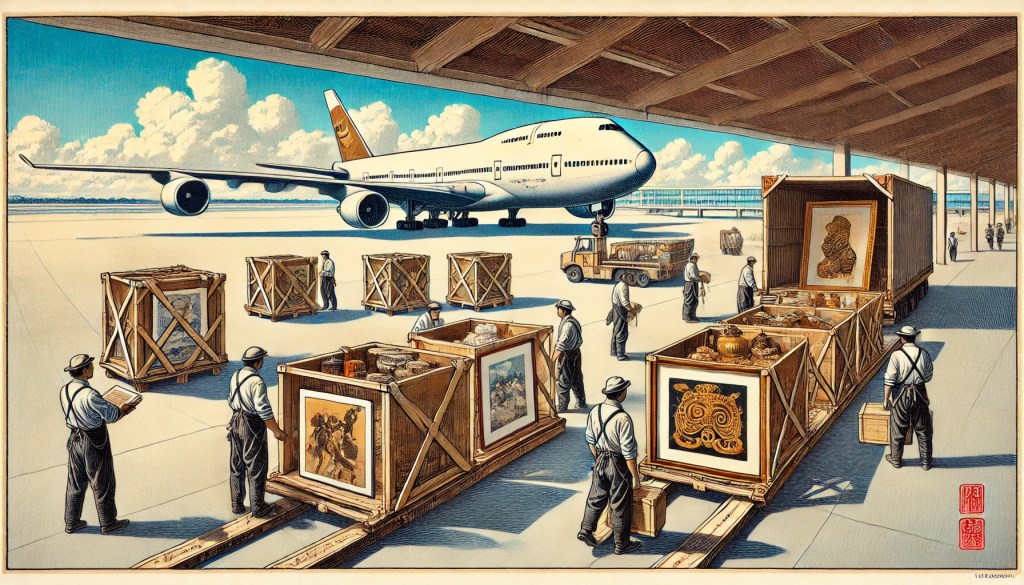
The Protected Objects Act 1975 is part of New Zealand’s legal response to the need to protect and preserve its material cultural heritage and comply with international obligations to assist other countries with the protection of theirs.
The Act provides for the regulation of the export, import and restitution of certain culturally significant objects, broadly aligning with international standards set by agreements such as the 1970 UNESCO Convention; and the 1995 UNIDROIT Convention. It also provides for the regulation of ownership of certain Maori cultural items.
This article addresses how the Act regulates the export of “protected New Zealand objects”.
Export applications
The Act prohibits the unauthorised export of “protected New Zealand objects” without permission from the chief executive of the Ministry for Culture and Heritage. To understand how the Act works it is important to understand what these objects are.
What are “Protected New Zealand Objects”?
The Act defines “protected New Zealand objects” as:
- movable objects that are of importance to New Zealand, or to a part of New Zealand, for aesthetic, archaeological, architectural, artistic, cultural, historical, literary, scientific, social, spiritual, technological, or traditional reasons; and
- which fall within 1 or more of the following categories:
- Archaeological, ethnographic, and historical objects of non-New Zealand origin, relating to New Zealand;
- Art objects including fine, decorative, and popular art;
- Documentary heritage objects;
- Ngā taonga tūturu (defined as being objects that relate to Māori culture, history, or society which are or appear to have been manufactured or modified in New Zealand by Māori; brought into New Zealand by Māori; used by Māori; and are more than 50 years old);
- Natural science objects;
- New Zealand archaeological objects;
- Numismatic and philatelic objects;
- Science, technology, industry, economy, and transport objects; and
- Social history objects.
Each category is further defined in the Act, which also generally requires that objects variously be of a certain age (or to have been in New Zealand for a certain time); to be relevantly connected to New Zealand; and in most cases not to be represented by comparable examples in New Zealand public collections. However, some categories are more or less restrictive and as such, a close reading of the Act as well as an understanding of the nature of the object in question, will be required in some cases to determine whether a particular object is caught.
Ultimately though, assessing whether the Act applies to an object or not requires a commonsense and practical approach which avoids unreasonable consequences, with the Courts having observed that the Act is directed towards the protection of individual objects or collections of objects which form part of New Zealand’s important cultural heritage.
As such, the Act is intended to protect certain objects of particular national value, not to create sweeping export restrictions on entire categories of object. Furthermore, the scheme of the Act tends towards narrowing the broad definitions set out above to a significant degree, with the Court of Appeal having observed that even an artwork by an artist as significant to New Zealand as C. F. Goldie might not be captured if there were sufficient comparable examples of his work in New Zealand public collections.
Nevertheless, there can be significant consequences for exporting (or attempting to export) a protected New Zealand object without permission, so if you are considering exporting an object which you believe could fall under the Act, and want advice on whether or not the Act applies, you can contact the Ministry directly for their view.
Alternatively, you can contact us to seek confidential legal advice.
The Application Form
The process for obtaining permission to export a protected New Zealand object involves making an application to the Ministry in the prescribed form, available on the Ministry website. This requires certain information to be provided to the Ministry about the applicant; how the object will be exported; and of course information about the object itself, including things like it’s name or description, and, if known, age; value; details of who created it and where (or where it was found); physical description; provenance; and any other information.
If the object is determined to be a protected New Zealand object then photographs must also be provided, and these become property of the Ministry.
Details of when the object is to be exported, how and to where (but not to whom) must also be given.
Finally, if a temporary export license is being requested, details of the reasons for the temporary export must be included, along with when and how the object will be returned.
The application must then be confirmed by way of declaration.
Assessment
The chief executive is required to evaluate applications based on an object’s cultural importance, and can either decline to authorise its export, or grant it either unconditionally or on terms.
The Act emphasises the importance of expert evaluation in this decision-making process, and the chief executive is required to consult 2 or more expert examiners when considering an application. Their role is to assess the cultural significance of objects and provide recommendations to the chief executive. These experts are protected from liability for any advice or recommendation that they might make, provided their recommendations are made in good faith.
Some protected New Zealand objects are not permitted to be exported permanently from New Zealand at all. These are protected objects that are deemed by the chief executive of the Ministry (in consultation with experts examiners) to be not only connected to and important to New Zealand, but also of such significance to New Zealand or part of New Zealand that its export would substantially diminish New Zealand’s cultural heritage.
Export Certificates and Conditions
If export permission is granted, a certificate must be issued to the applicant, specifying any terms or conditions applying to the grant.
Conditions need not be imposed at all. But if the chief executive deems conditions appropriate the Act provides a wide discretion as to the range of conditions that could be imposed. This provides flexibility for the chief executive to deal with different applications and conditions. But this discretion is not completely unfettered, as the range of permissible conditions will be restricted by principles of administrative law, meaning (very broadly speaking) that any condition will need to be reasonable.
The Act nevertheless provides some examples of possible conditions, including:
- requiring the owner to permit the object to be copied by photography, cast, or otherwise in such manner, in such numbers, and by such person, as the chief executive may direct (with the copy then being property of the Crown);
- requiring the owner of the object to deliver it to such person as the chief executive may direct for the purpose of being packed and dispatched from New Zealand, at the cost and risk of the owner, to the address specified by the owner;
- requiring the object to be returned to New Zealand no later than the date of the expiry of a period specified in the certificate of permission to remove the protected New Zealand object from New Zealand.
Registered Objects
To further safeguard cultural heritage, the Act mandates the creation of a register for objects of national significance. An object must be added to the register if the chief executive has refused to grant an application for permission to export it. Objects can otherwise be added if their owners voluntarily submit a qualifying object for inclusion on the register. Once included in this register objects cannot be permanently exported from New Zealand, and if an unauthorized export occurs, the chief executive is empowered to take necessary actions to secure the object’s return.
Challenging decisions
Applicants dissatisfied with the chief executive’s decision can appeal to the Minister within 28 days of when the decision is made known to them, arguing that the decision was unreasonable. The Minister can confirm, vary, or reverse the decision, with the final ruling being binding (but that may still be subject to Judicial Review or other administrative law remedies).
If you are interested in challenging a decision of the chief executive or the Minister, we would strongly suggest seeking legal advice well ahead of the 28 day deadline.
Case Studies
We have written about two examples of the application of the Act, the first showing the considerations applied to a particular application to export a protected New Zealand object, and the second a court decision determining what exactly a protected New Zealand object is.
What happens if an object is exported without permission?
Unauthorised exportation of a protected New Zealand object is an offence and is met with severe penalties, including hefty fines of up to $100,000 for individuals or $200,000 for a body corporate, not to mention potential imprisonment of up to 5 years.
One can fall foul of this without the object concerned actually leaving the country, as the Act defines export in such a way that simply dispatching the object for export will be caught.
If that were not enough, protected objects that are exported (or attempted to be exported) in violation of the Act may also be forfeited to the Crown under the Customs and Excise Act 2018, although the items can be returned to their owner at the discretion of the chief executive, subject to any conditions the chief executive thinks fit.
The information on this website is general in nature and may not be up to date. It is not intended as legal advice for any specific situation or person and should not be relied on for that purpose. You should always seek up to date legal advice for your specific situation.
Contact us to find out more.
 Lawof.Art
Leave a comment